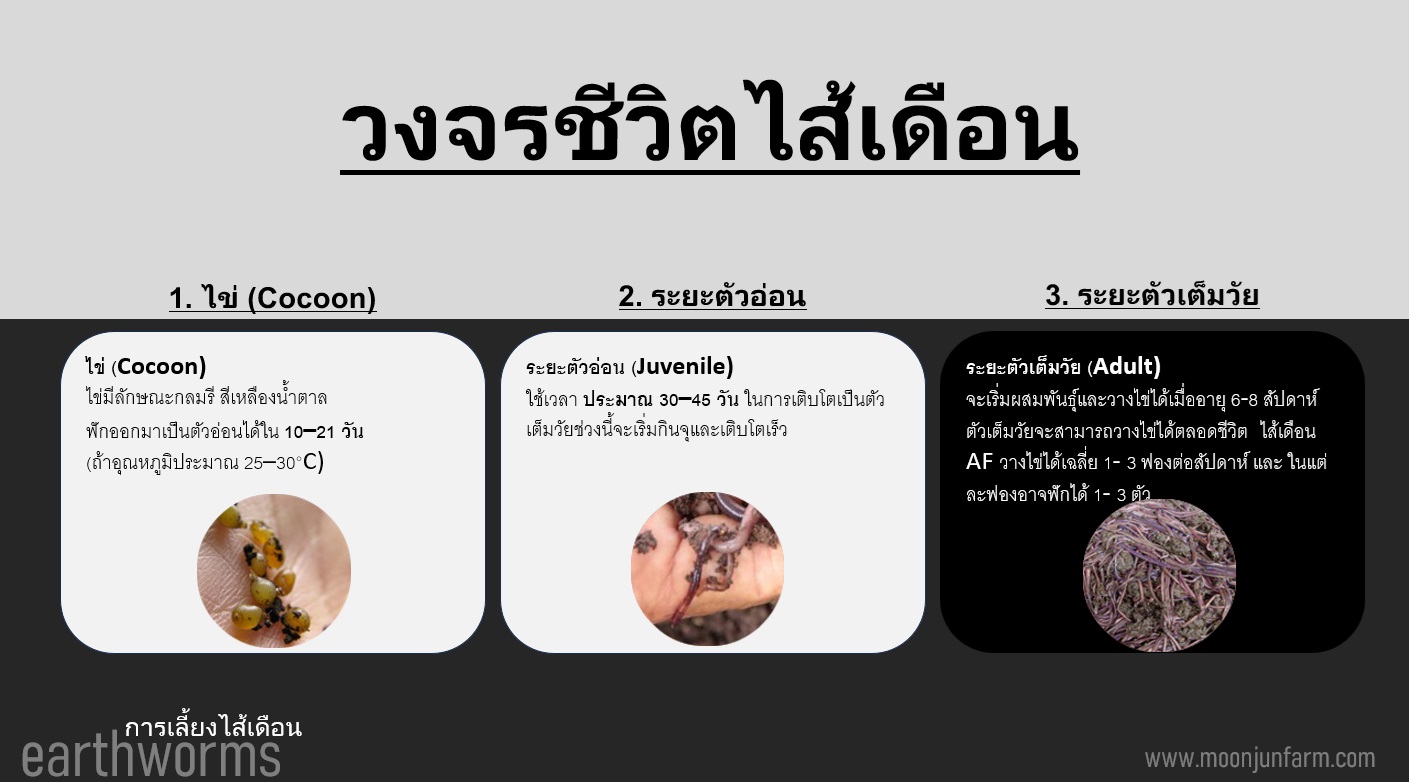

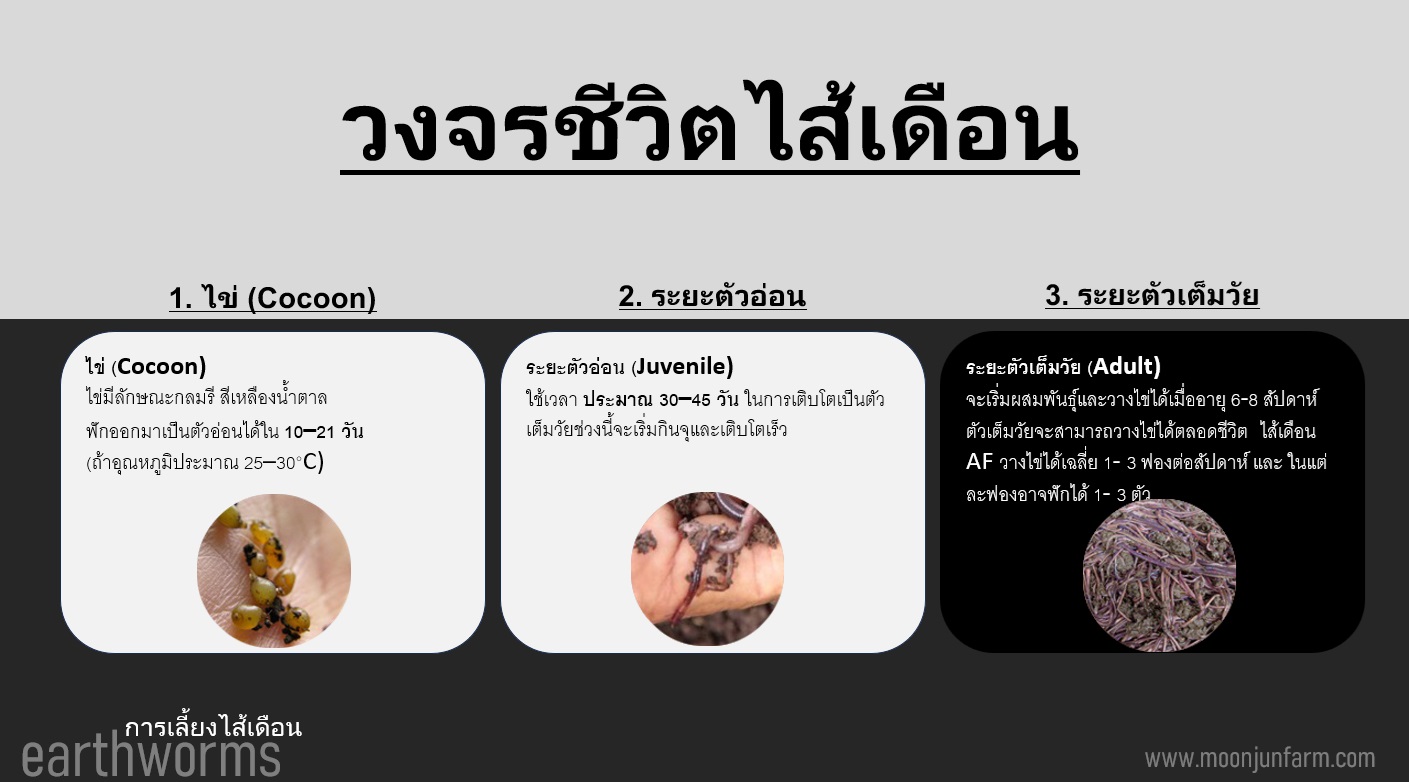
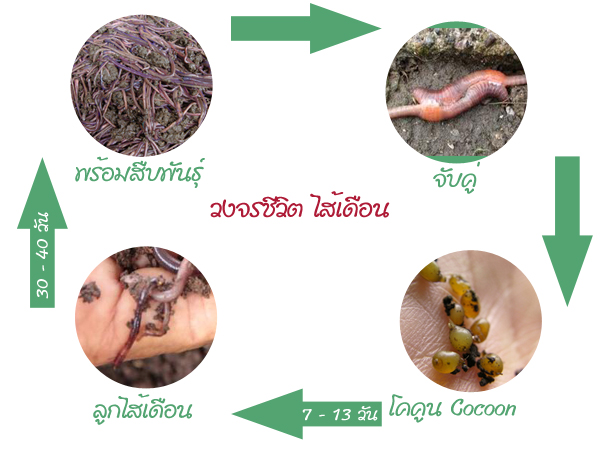
Life cycle of earthworms
Mating of earthworms
Earthworms normally mate during the night when two earthworms mate by using their abdomen sides together and alternating heads and tails. The male reproductive organ is attached to the The spermatic cord of the other The reproductive button and the mucus around the clitoris hold each other together. Sperm from the male reproductive tract is carried into the sperm sac. Pairing takes approximately 1 hour to separate.
When earthworms separate for about 2-3 days, there will be changes in the clitoral area. To create the egg sac (Cocoon), the mucous gland creates mucus covering the clitoral area and the cocoon secreting gland creates the cocoon's shell. which is a substance similar to chitin This substance hardens when exposed to air and becomes a sticky sheet. Later, the albumin secreting gland secretes albumin into the cocoon's shell.
which has the female reproductive cavity at the clitoris The eggs will be released into the cocoon. After that, the cocoon will separate from the earthworm's body wall like a loose casing. When the earthworm shrinks and moves backward The cocoon moves forward. When moving through the opening of the sperm storage bag It will receive sperm into the cocoon. And there is fertilization inside the cocoon. When the cocoon escapes from the earthworm's body, the two ends of the cocoon shrink and close completely. It is an oval sac with a light yellow color, approximately 2-2.4 mm long and 1.2-2 mm wide. Each egg sac takes 8-10 weeks to hatch. Generally there will be 1-3 eggs, depending on the species. Some types of earthworms may have as many as 60 eggs. The earthworm larvae inside the eggs will grow and develop in various parts of the body. by using the nutrients contained within the egg sac While the embryo grows and develops in the egg sac, The walls of the egg sac will also change color. The egg sac that is newly released will have a faint color and as time passes the color of the egg sac will become darker accordingly. and will hatch at a later time