
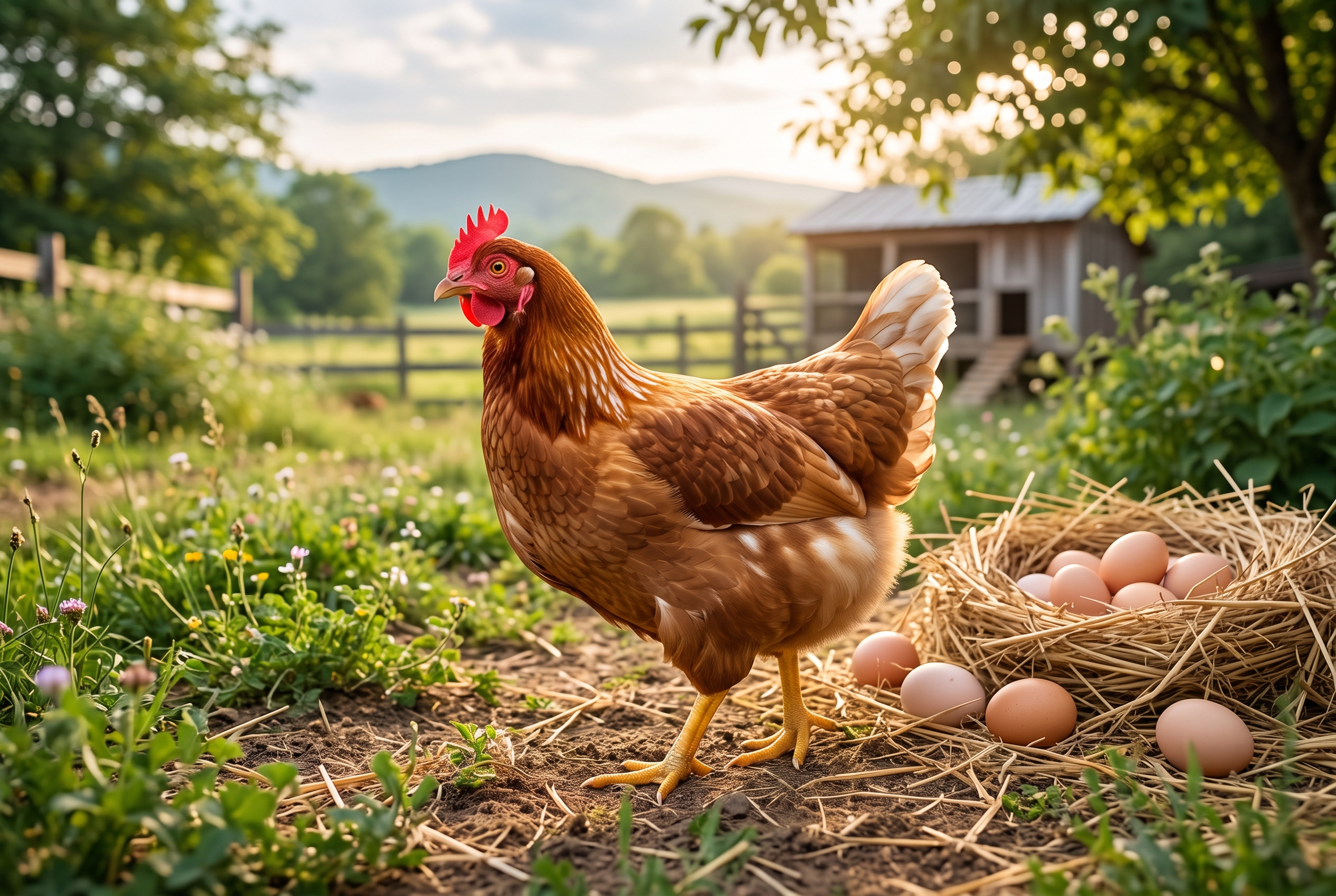
Hy-Line Brown egg laying chicken (Hy-Line Brown)
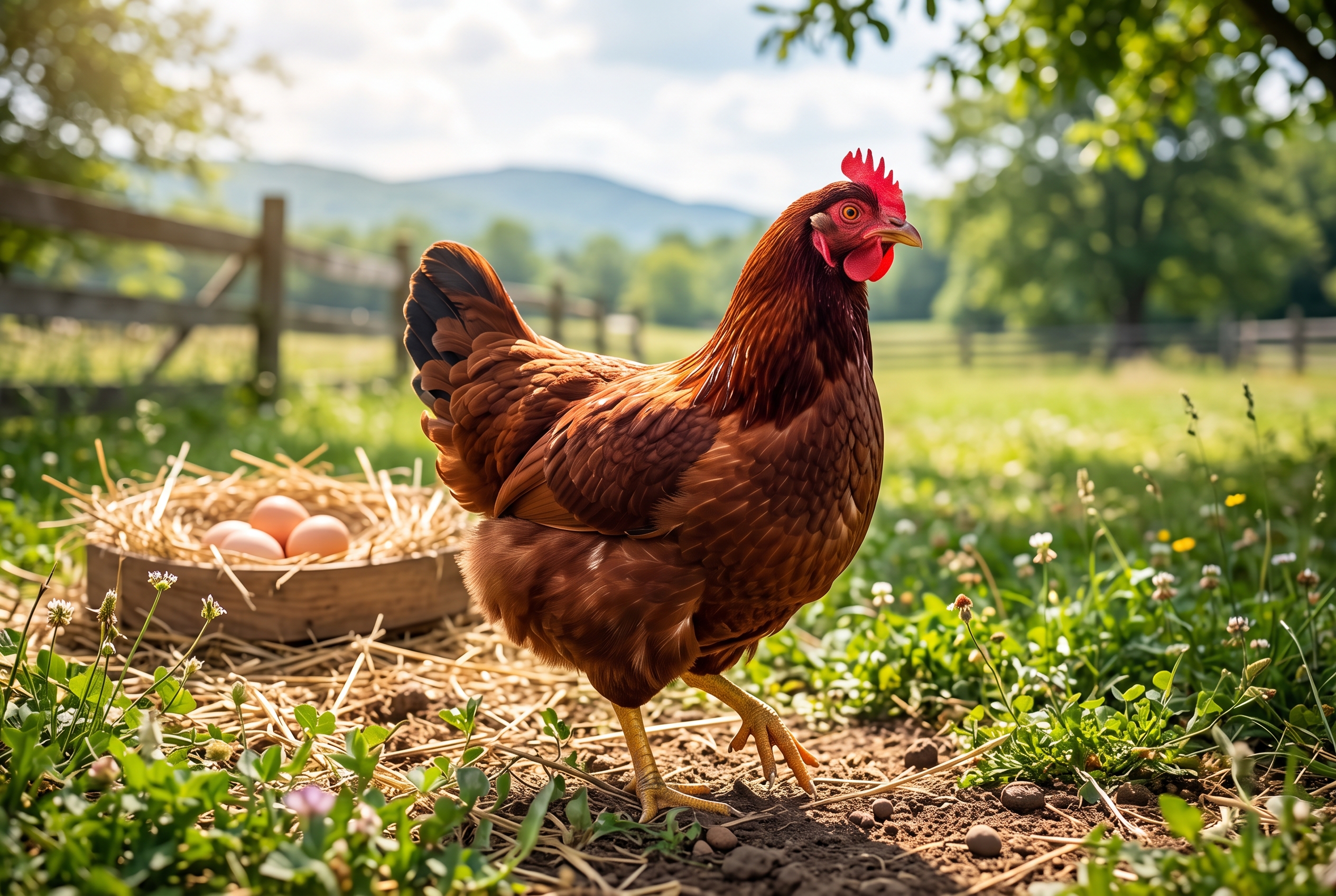
Hy-Line Brown is a popular commercial hybrid laying hens around the world. The highlight is that it starts giving eggs quickly. Give lots of brown-shelled eggs. Use food worthwhile and can adapt to many types of farming systems
Highline Brown Not a purebred chicken When the parent chickens are mixed together The resulting offspring may not have the same characteristics and production as chicks from the breeding company.
History
Hy-Line originates in the United States. Its work on laying hens began in the 1930s under the initiative of Henry A. Wallace.
An important method of development is selection of the paternal and maternal lines. Then mixed to create strength and high production efficiency in the offspring. Later, several lines of commercial laying hens were developed, including the Hy-Line Brown, which was selected for the production of brown-shelled eggs.
Important goals for improving the chicken line include:
- Continuously give a lot of eggs
- Start laying eggs early
- Providing eggs of the right size and with strong shells.
- Use food efficiently
- It has a high survival rate and strength.
- Adaptive to the cage Cage-free greenhouses and release systems
Details of the parent lines used to produce chicks are exclusive to the developer.
Line characteristics
Appearance
- Hens have reddish brown to golden brown feathers.
- The tail and wingtips may have white feathers.
- The crest, earlobes, and wattles are red.
- The tibia and skin are often yellow.
- medium sized body Their shape is more suitable for egg production than for meat production.
- When fully grown Hens usually weigh around 1.8–2.1 kilograms.
- Give brown-shelled eggs. medium to large size
Productivity characteristics
Hens usually begin laying eggs at around 18–20 weeks of age if they are provided with the right food, light and management. The rate of laying eggs will gradually increase until reaching the maximum. Then it decreases with age.
Under good commercial management More than 300 eggs can be produced per year, but the actual number will vary based on production line, age, diet, health, temperature, and housing system.
Chickens are relatively calm, alert and well-adjusted. In general, there is little incubation behavior. Therefore, it is more suitable for egg production than for natural propagation.
How to raise
1. Chick stage
At first, the chick brood area must be prepared to be warm, dry, clean, and free of drafts. Chicks' behavior should be checked to adjust to the heat:
- Huddling together under the brooder Indicates that the weather is too cold.
- Run away from the brooder and open your mouth to breathe. indicates too hot
- Distribute evenly and eat normally. Shows that the temperature is appropriate
Clean water should be provided immediately when the chicks arrive. And check that all chicks have access to water and food.
2. Greenhouse
The greenhouse should be airy, well ventilated, and protected from rain, strong winds, strong sunlight, and predators. The floor must not be damp or waterlogged. If foundation materials such as rice husks are used, keep them dry and replace wet areas immediately.
Should prepare:
- Adequate space to eat food and water
- stable perch
- Approximately 1 nest per 4–5 hens.
- Area for scavenging or dust bathing
- Shade for free-range chickens
- Fencing protects against dogs, snakes and predators.
3. Food according to age
Food should be selected according to age, weight and stage of production. Because feeding at the wrong time may cause the chicken to grow unevenly or not produce eggs at their full potential.
- Age 0–6 weeks: Chick food, approximately 18–20% protein.
- Age 7–15 weeks: Young chicken diet, approximately 15–17% protein.
- Pre-egg period: Gradually switch to pre-egg food based on flock weight and development.
- Laying stage: Layer feed, generally 16–18% protein, with a balance of energy, amino acids, calcium and phosphorus.
Layer feed that is high in calcium should not be fed to chicks or young chickens for a long time. Because it may have negative effects on kidneys and growth.
Vegetables, grasses, or grains can be given as supplements. But it shouldn't be so much that the chickens eat less of their main food.
4. Drinking water
Chickens must have clean water at all times. Especially during hot weather Dehydration leads to reduced food intake, reduced egg production and rapid deterioration of eggshell quality.
Water containers should be washed every day. Check that the water head is not clogged. And place the container in a shaded, easily accessible area.
5. Light management
The egg-laying stage should receive approximately 14–16 hours of total light per day. It combines natural and supplementary lighting. Turning on and off lights should be on time. And the light hours should not be reduced suddenly.
Chickens should not be stimulated with light to start laying too early before the flock has reached the appropriate weight and body structure. Because it may make the eggs small Long-term productivity declines and problems with the reproductive system
6. Egg collection
- Collect eggs at least 2–3 times a day.
- Increase frequency during hot weather
- Keep your ovaries clean and dry.
- Separate broken eggs, cracked eggs, and dirty eggs.
- Store eggs in a cool, clean, and free from strong odors.
- Eggs should not be washed with cold water or soaked in water. This may increase the chance that germs will pass through the shell and enter the egg.
7. Care in Thailand
Hot weather and high humidity can cause your chickens to eat less food, so you should:
- Make the greenhouse airy and have air circulation.
- Prevent sunlight from shining directly into the greenhouse.
- Provide clean water that is not too hot.
- Add a watering point in the summer.
- Feed mostly in the morning and evening.
- Reduce herd density
- Avoid handling or transporting during the day.
8. Disease prevention
- Clean the greenhouse and equipment regularly.
- Separate new chickens before bringing them into the flock.
- Isolate sick chickens and investigate the cause immediately.
- Controls rats, wild birds, insects, mites and lice.
- Do not share containers or equipment with other farms without disinfecting them.
- Organize a vaccination program to suit the disease in the area. By consulting a veterinarian or livestock officer.
strength
- Provides abundant eggs and continuous production
- Starts laying eggs quite early.
- Use food worthwhile
- The eggs have a brown shell and are fairly uniform in size.
- Their temperament is quite calm and easy to handle.
- Can be raised in a cage system Cage-free greenhouses and release systems
- Suitable for commercial farms and backyard farming.
Precautions
- It's a hybrid chicken. Therefore, it is not suitable for further breeding to maintain the original production.
- You must have a balanced diet with enough calcium.
- Heat and lack of water quickly reduce yield.
- Stimulating light too quickly can cause eggs to be small and affect long-term production.
- Gives less meat than semi-egg chicken.
- High yields require careful monitoring of bone problems, thin eggshells, and abdominal or reproductive system conditions.
In summary, Hy-Line Brown is suitable for farmers who want brown-shelled laying hens that are highly productive and use feed efficiently. Success in farming depends on consistent control of flock weight, food, water, light, temperature, and health.