
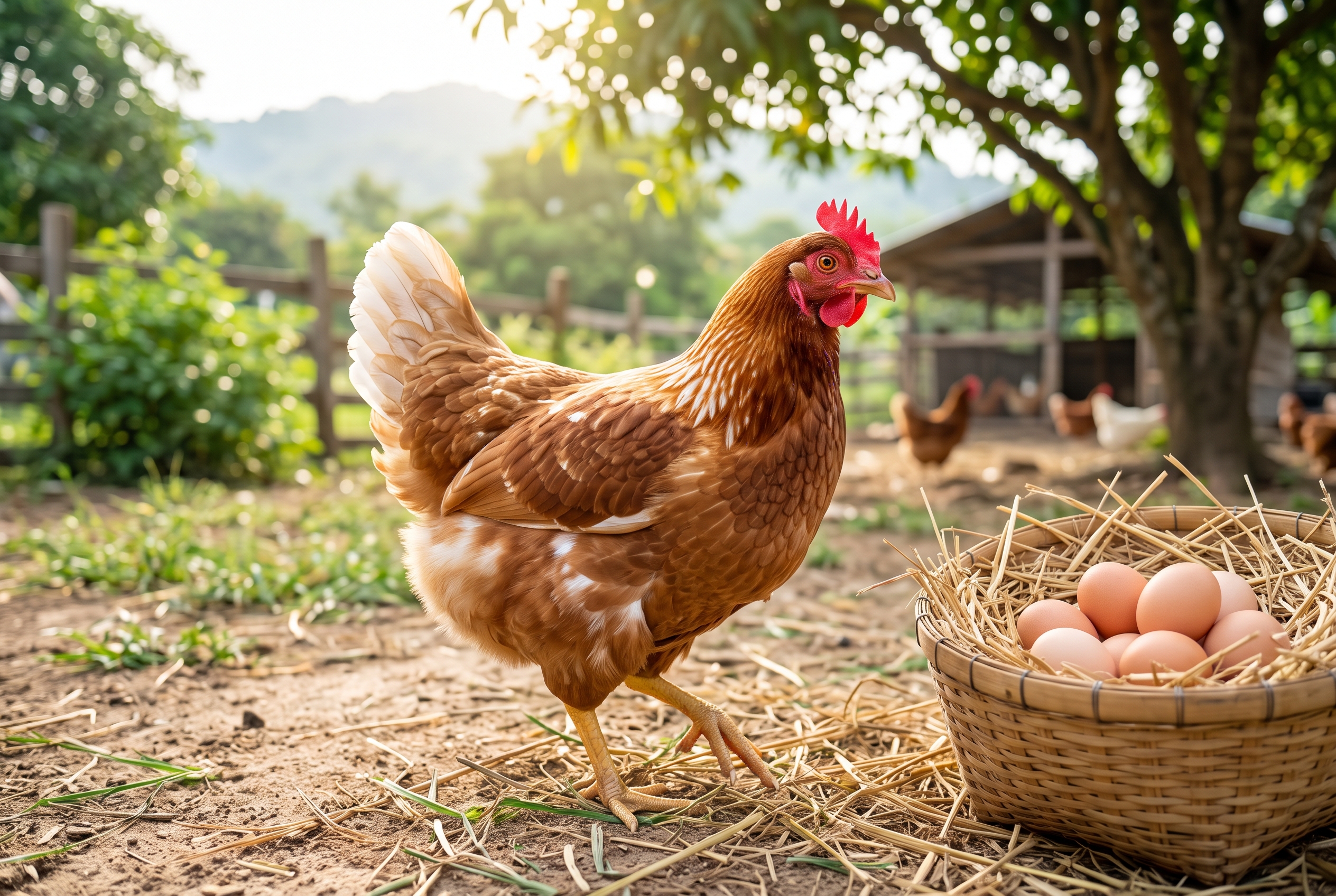
Isa Brown laying hens (ISA Brown)
ISA Brown is a commercial hybrid egg laying hens that are prolific in laying, start laying quickly and adapt well. Therefore, it is popular in both industrial farms and backyard farming. However, ISA Brown Not a purebred chicken Offspring produced by inbreeding will not have the same characteristics and production as the parents.
History
The ISA Brown was developed in France by the Institut de Sélection Animale, or ISA. The name “Brown” comes from the brown color of its coat and eggshell.
The developers selected the father and mother lines over several generations. Before being bred into commercial hybrid chickens with outstanding properties include:
- Start laying eggs early
- give a lot of eggs
- Change food into good egg production.
- Give large, brown-shelled eggs.
- They have a rather calm temperament and are easy to handle.
The details of the strains used are the exclusive information of the developer. Therefore, it is not possible to produce ISA Brown with the same properties by mixing ISA Brown father and mother chickens together.
General characteristics
Appearance
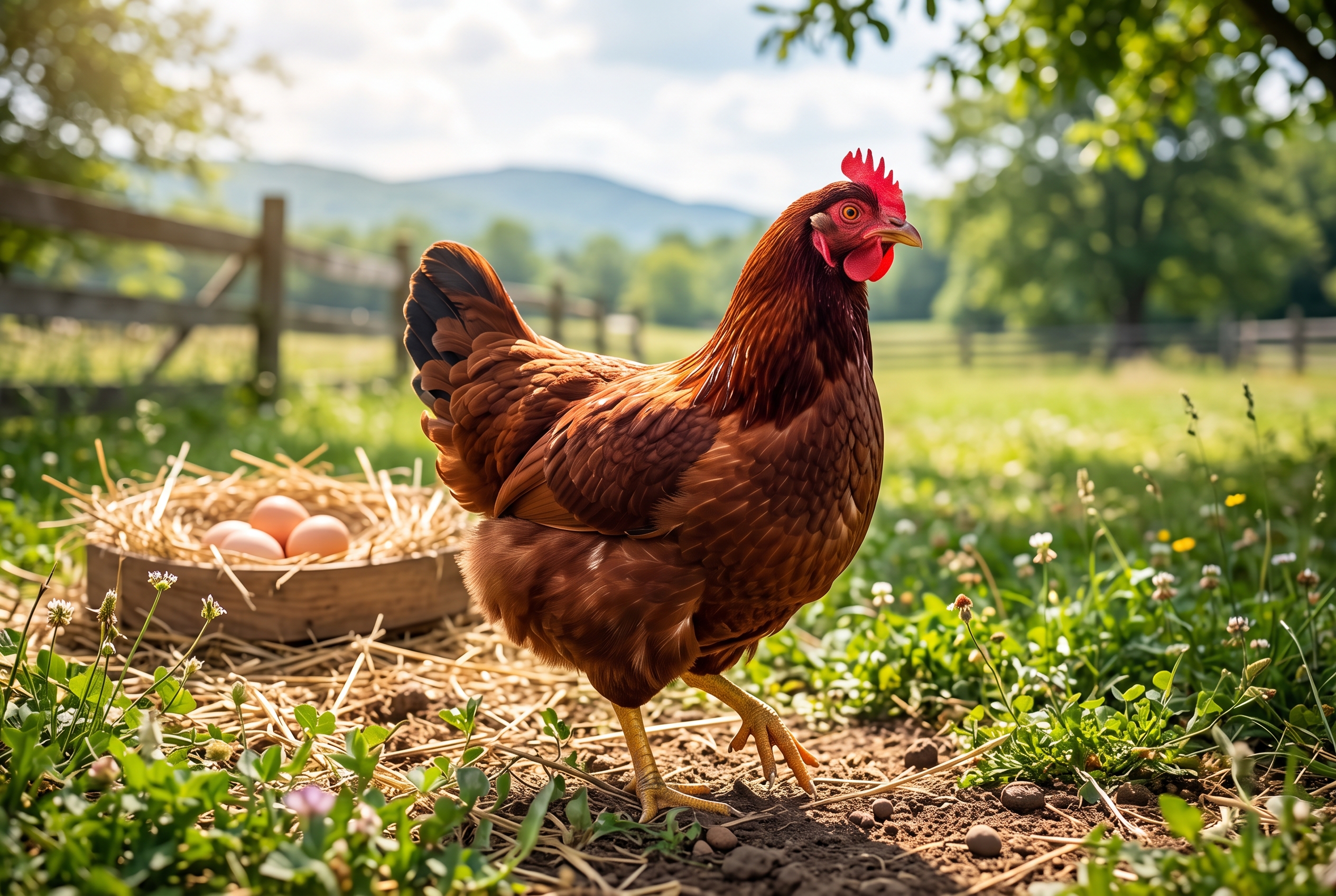
- Hens have reddish-brown or golden-brown feathers.
- There may be white feathers on the tail, wings, or lower part of the body.
- The father chicken is usually lighter or whiter than the mother hen.
- The crest, earlobes, and wattles are red.
- The shins are hairless and are usually yellow.
- medium sized body Not as thick and heavy as broiler chicken.
- When fully grown Hens usually weigh around 1.8–2.2 kilograms.
- Give brown-shelled eggs. medium to large size
Productivity characteristics
When given proper food, light and care Hens may begin laying eggs at approximately 18–20 weeks of age and are highly productive during their first year.
Typical egg counts may be around 300 eggs per year or more in a properly managed system. But the actual production depends on the production line, age, health, food, light, temperature, and farming conditions.
Hens are quite docile. sociable and rarely have the habit of hatching eggs Therefore, it is more suitable for raising eggs than for natural propagation.
How to raise
1. Greenhouse
The greenhouse should be dry, clean and well ventilated. Can protect from rain, strong sun, strong winds and predators. Should not be raised too densely Because it causes chickens to become stressed, peck at each other and easily develop disease.
Things that should be prepared include:
- stable perch
- Approximately 1 nest per 4–5 hens.
- Sufficient food and water containers
- Foundation material, such as rice husks, that is clean and dry.
- Walking area or rummage area If raised free
- Shade and good ventilation during hot weather.
2. Food according to age
Chicks 0–6 weeks old
Use good quality chick food. Contains about 18–20% protein. During this time, chicks need to be warm and have access to food and water at all times.
Young chickens are approximately 7–17 weeks old.
Feed young chickens food that has about 15–17% protein. Do not feed laying hens too early. Because it is high in calcium and not suitable for chickens that have not started laying eggs yet.
Chickens close to eggs and egg-laying period
When they begin to reach age, they give eggs or find their first egg. Therefore, it is changed to a layer feed that has about 16–18% protein and enough calcium to build egg shells. Changing your diet should be done gradually.
You can add a small amount of vegetables, grasses, or grains. But dietary supplements should not replace the main diet. Because it will dilute the nutrients and reduce egg production.
3. Drinking water
There must be clean water for the chickens to drink at all times. Even a short period of dehydration can lead to decreased food intake, fewer eggs, and thin eggshells. Water containers should be washed daily and kept in the shade.
4. Light management
Egg-laying hens should receive approximately 14–16 hours of total light per day. If natural light is not enough Can be supplemented with light bulbs. But there should be a definite opening and closing time.
The exposure period should not be reduced suddenly. This may cause the egg production to decrease or temporarily stop laying eggs.
5. Caring for hot weather
ISA Brown can be raised in Thailand. But high heat affects feed intake and egg production, so you should:
- Make the greenhouse open and shaded.
- Provide clean water that is not very hot at all times.
- Add a watering point during the summer.
- Reduce the density of chickens
- Feed in the morning or in the evening when the weather is cooler.
- Avoid handling, moving, or disturbing chickens during the day.
If a chicken opens its mouth to breathe, spreads its wings, drinks an unusual amount of water, or is lethargic, it may be suffering from heat stress.
6. Disease prevention
- Clean the greenhouse and equipment regularly.
- Keep the underlayment dry.
- Separate new chickens to observe symptoms before joining the flock.
- Isolate sick chickens immediately.
- Protects against rats, wild birds, mites, lice and insect vectors.
- Use a clean house entry and exit system.
- Organize vaccination programs according to diseases found in the area. By consulting a veterinarian or livestock officer.
strength
- Let the eggs be prolific and start laying quickly.
- Using food is quite worthwhile.
- Brown-shelled eggs, uniform size
- The temperament is quite calm and easy to raise.
- Suitable for both commercial farms and backyard farming.
- Can be raised in both greenhouses and free-range systems.
Precautions
- Not suitable for breeding and maintaining lines. Because it's a hybrid chicken.
- Productivity will decrease with age. Especially after the peak egg-laying period.
- You must get a balanced diet. Especially protein, calcium and vitamins.
- There is a risk of thin cartilage or eggshells. If you don't get enough calcium
- Hot weather, stress, and dehydration cause egg production to decline rapidly.
- They don't produce as much meat as semi-egg meat chickens such as Rhode Island Red or New Hampshire.
In summary, ISA Brown is suitable for those who want a large egg production and care for their flock with systematic food, water, light and disease prevention. If you want to breed and breed yourself in the long term You should choose purebred chickens over this type of hybrid chicken.