
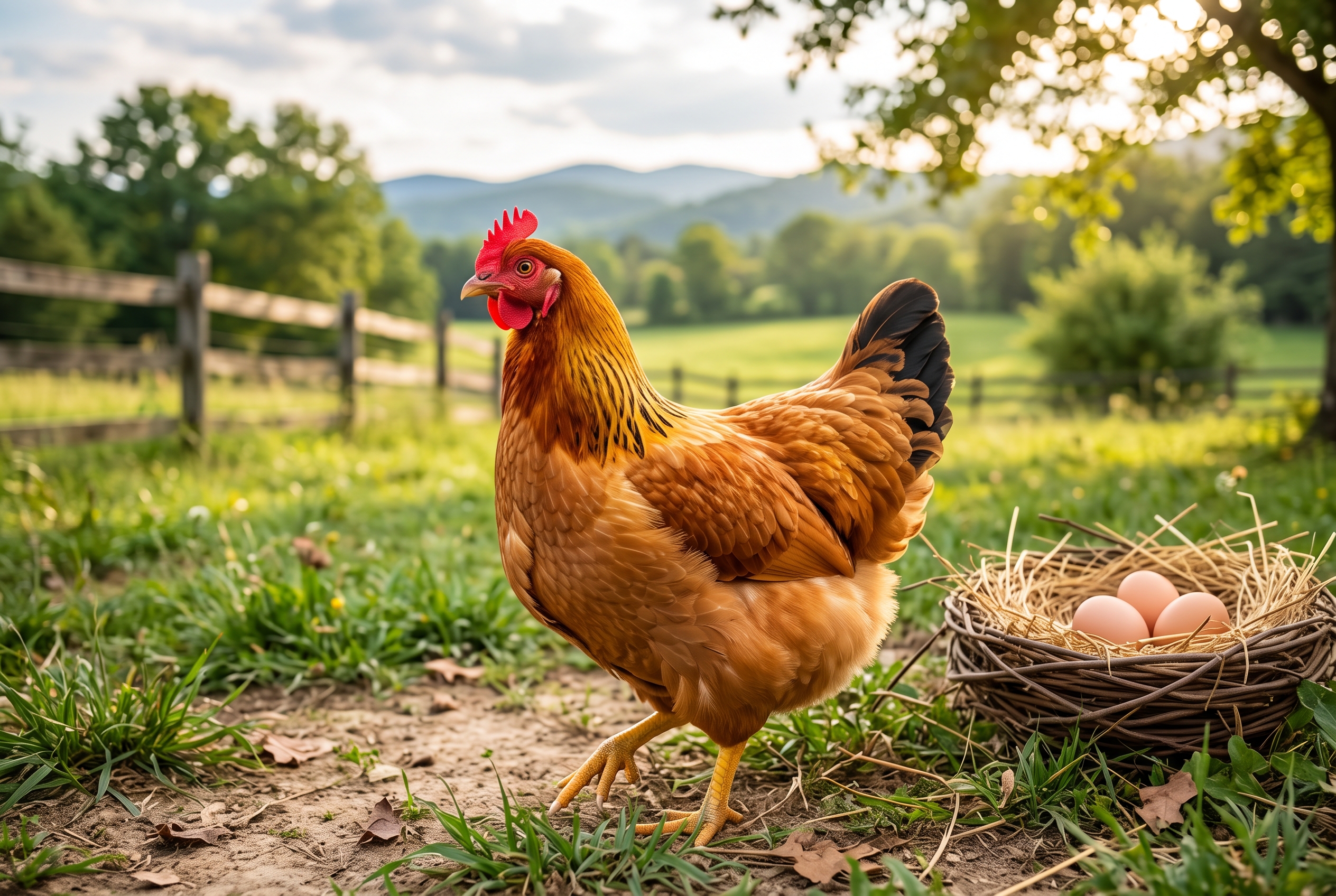
New Hampshire Chicken
New Hampshire chickens are semi-egg chickens that grow quickly, are strong, and produce brown-shelled eggs. Suitable for raising in household farms. Free release system and small to medium sized farms
History
New Hampshire chickens were developed in New Hampshire. United States In the early 20th century, it was selected and improved from Rhode Island Red chickens (Rhode Island Red).
The developer aims to select chickens that have important qualities, including:
- Grows quickly and grows hair quickly.
- It gives good texture and a plump carcass.
- matures quickly
- Gives eggs well
- Strong and easily adaptable to the environment
The breed was legalized in the United States in 1935 and was later used in the development of broilers and several hybrid chicken breeds.
Breed characteristics
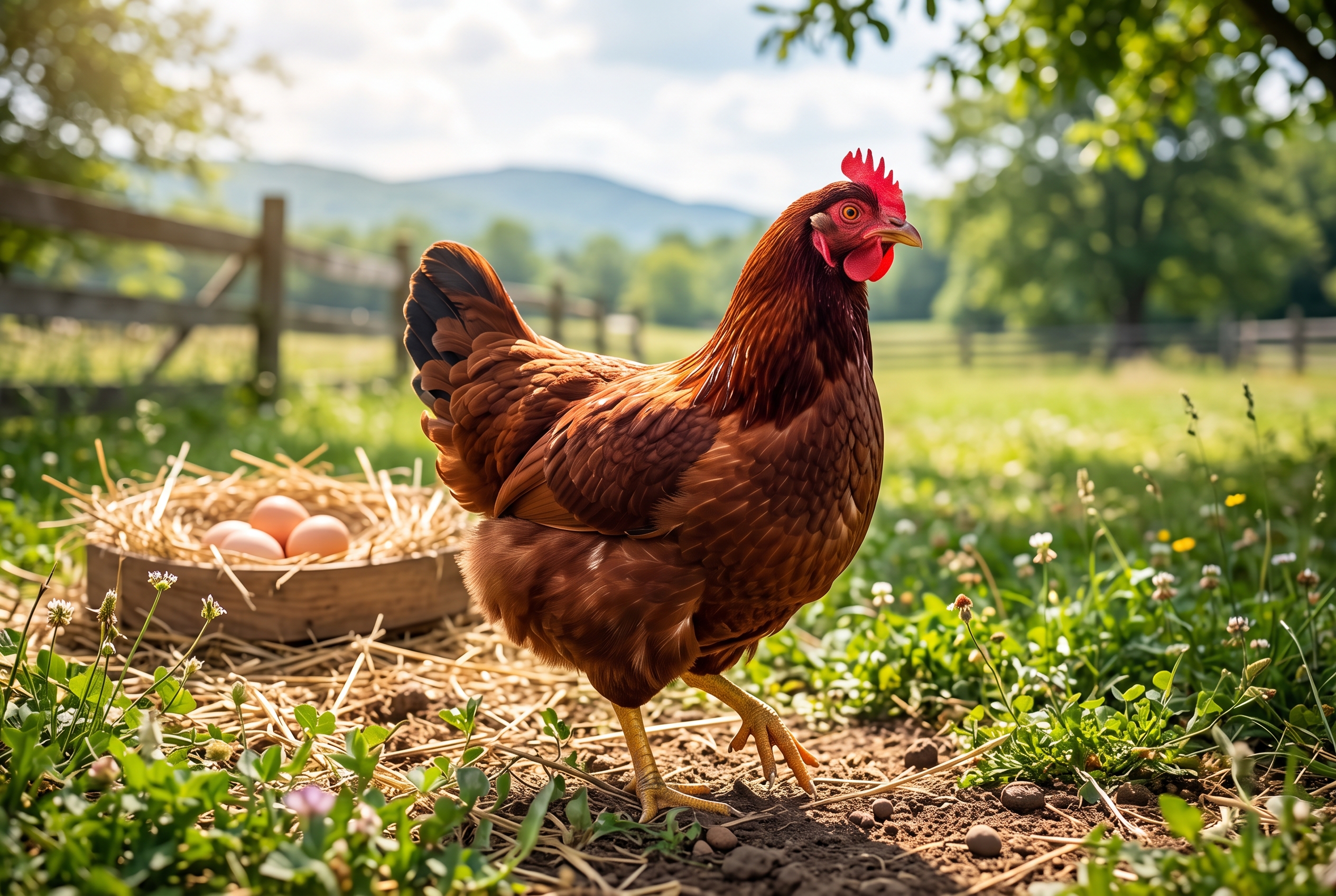
- The fur is reddish brown or chestnut red. Generally lighter in color than Rhode Island Red.
- The feathers on the neck, wings, and tail may have black tinges.
- Males are brighter and more shiny than females.
- Red crest, erect.
- Red earlobes and wattles
- The beak, shins, and skin are yellow.
- The body is wide, deep, round and well muscled.
- Legs are strong, no hair covering the legs.
- Gives medium to large brown-shelled eggs.
Approximate adult weight:
- Male chicken 3.5–3.9 kg.
- Hen 2.7–3.0 kg
A hen may produce approximately 180–250 eggs per year, depending on subspecies, diet, health, and husbandry system. Some have the habit of hatching eggs and raising young well.
character
New Hampshires are energetic, strong chickens that are good at foraging in the wild. They are generally docile and easily get used to their owners. However, some male hens can be territorial or exhibit aggressive behavior. Especially when living with other chickens in a limited area.
How to raise
1. Greenhouse
The greenhouse should be airy. Good ventilation and can protect from sun, rain, strong winds and predators. The floor must be dry and not prone to water retention. Use clean rice husks or bedding and change it when it becomes damp or smells.
Should provide:
- Strong perch
- Approximately 1 nest per 4–5 hens.
- Sufficient food and water containers
- Walking area or grass plot for ferrets
- Shade for shelter from the sun Especially in hot weather
2. Food according to age
- Chicks 0–6 weeks old: Use chick food with approximately 18–20% protein.
- Young chickens 7–18 weeks of age: Use young chicken feed with approximately 15–17% protein.
- Egg-laying hens: Use egg-laying chicken feed containing about 16–18% protein with adequate calcium.
- Chickens raised for meat: Provide a balanced diet that is sufficient for growth. But the weight of the breeder must be controlled so that it is not too fat.
Can be supplemented with appropriate amounts of vegetables, grasses, insects, or grains. But dietary supplements should not replace the main diet. Because it may cause incomplete protein, vitamins, and minerals to be received.
3. Water and hot air management
There must be clean water for the chickens to drink at all times. In hot weather you should:
- Place the water container in the shade.
- Change the water so it is clean and not hot.
- Increase ventilation within the greenhouse
- Reduce the density of chickens
- Avoid handling or moving chickens during the hot daytime.
If the chicken opens its mouth to breathe, spreads its wings, is lethargic, or eats less food. It could be a sign of heat stress.
4. Light for laying hens
Egg-laying hens should receive approximately 14–16 hours of total light per day. If using additional lighting You should increase the time gradually and turn on and off regularly. Sudden changes in photoperiod may reduce egg production.
5. Disease prevention
- Clean food and water containers daily.
- Keep the underlayment dry.
- Separate new chickens to observe symptoms before bringing them into the flock.
- Isolate sick chickens immediately.
- Protects against rats, wild birds, mosquitoes, mites and lice.
- Do not raise chickens too densely.
- Arrange vaccines according to disease risk in the area. By consulting a veterinarian or livestock officer.
strength
- Grows and grows hair quickly
- Provide both meat and eggs
- There is a good amount of meat compared to other laying hens.
- Strong and easily adaptable
- Good at finding food naturally
- brown shell eggs The size is quite large.
- Suitable for free-range raising
Precautions
- Gives fewer eggs than commercial hybrid laying hens.
- Some male hens can be aggressive.
- Chickens may become too fat when fed very high energy feeds.
- Coat color and yield may vary by breed.
- Special care must be taken regarding heat when raising them in Thailand.
In summary, New Hampshire is ideal for owners who want healthy, fast-growing chickens that can be used for both meat and eggs. But if the goal is to produce a large number of eggs commercially. Specialized hybrid laying hens tend to have higher yields.