
Rhode Island Red
Rhode Island Reds are hardy, easy-to-raise chickens that lay eggs regularly. Suitable for both small farms free-range farming and backyard farming
History and origin
The Rhode Island Red was developed in the 19th century in the areas of Rhode Island and Massachusetts. United States By mixing several breeds of chicken such as Malayan chicken, Shanghai chicken and brown leghorn chicken. To get chickens that are strong, grow well and produce lots of eggs.
It was later accepted as a standard breed in the United States. and spread throughout the world It has also been used as the basis for the development of several commercial breeds of laying hens and hybrid chickens.
Breed characteristics
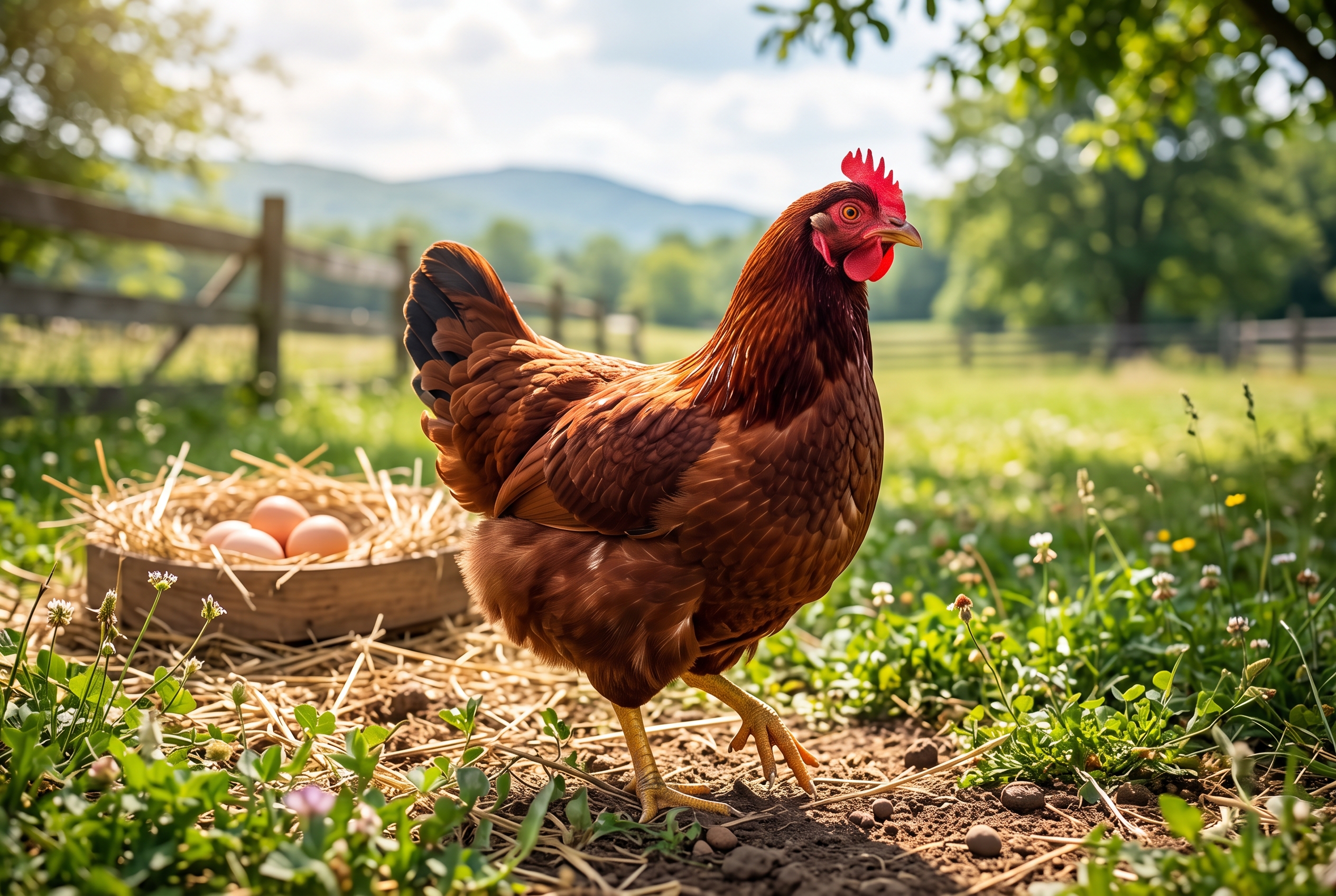
- The fur is dark red to reddish brown. Often shiny
- The tail is black or greenish-black. especially in male chickens
- Red crest, most often a chakra crest. But some have rose crests.
- Earlobes and wattles are red.
- Yellow skin and legs
- relatively long shape The body is deep and heavily muscular.
- An adult male chicken weighs approximately 3.4–3.9 kilograms.
- Adult female chickens weigh approximately 2.5–3.0 kilograms.
- Give brown-shelled eggs. Generally about 200–300 eggs per year, depending on the breed, food and rearing system.
This breed of chicken has an active temperament, is good at finding food, and adapts well to its environment. Most hens have a mild temperament. But some male chickens can be territorial or aggressive.
Breeding guidelines
house
The greenhouse should be airy. Good ventilation Canopy protects from sun and rain The floor must be dry and easy to clean. The perches and nest boxes should be kept in a quiet area. Arrange approximately 1 nest for every 4–5 hens.
Avoid dense farming. Because it will cause chickens to become stressed, peck easily and put them at risk of respiratory disease. If kept free-range, there should be a fence to protect it from dogs, snakes, and other predators.
food
Food should be fed according to age, including:
- Chicks: Chick food with approximately 18–20% protein.
- Model chicken: Model chicken feed with approximately 15–17% protein.
- Laying hens: Diet with approximately 16–18% protein and enough calcium to form eggshells.
Can be supplemented with vegetables, grass, insects or local ingredients. But it should not be used as a replacement for ready-to-eat food. There must be clean water available to drink at all times. And you should not feed food that is moldy, spoiled, or has an extremely salty taste.
Light management
Hens in the egg-laying stage need approximately 14–16 hours of total light per day. Light enhancement should be done regularly. Do not increase or decrease the duration suddenly. Because it may reduce egg production.
health care
- Clean the greenhouse and food and water containers regularly.
- Separate new or sick chickens from the flock.
- Control mites, lice, parasites and insect vectors.
- Organize the vaccination program to suit the epidemic in the area. By consulting a veterinarian or livestock officer.
- Watch for unusual symptoms such as lethargy, not eating, difficulty breathing, abnormal stools. or eggs decrease rapidly
Advantages and precautions
ข้อดีคือแข็งแรง Resistant to many weather conditions, good at finding food, giving both eggs and meat. and suitable for beginners A word of caution is that some male hens may be aggressive. Chickens can scavenge and damage vegetable gardens. And purebred lines that emphasize appearance may produce fewer eggs than lines selected specifically for production.
In hot weather like Thailand Shade should be emphasized. Ventilation and clean water that is not too hot Especially in the afternoon To reduce heat stress and help maintain consistent egg production.