
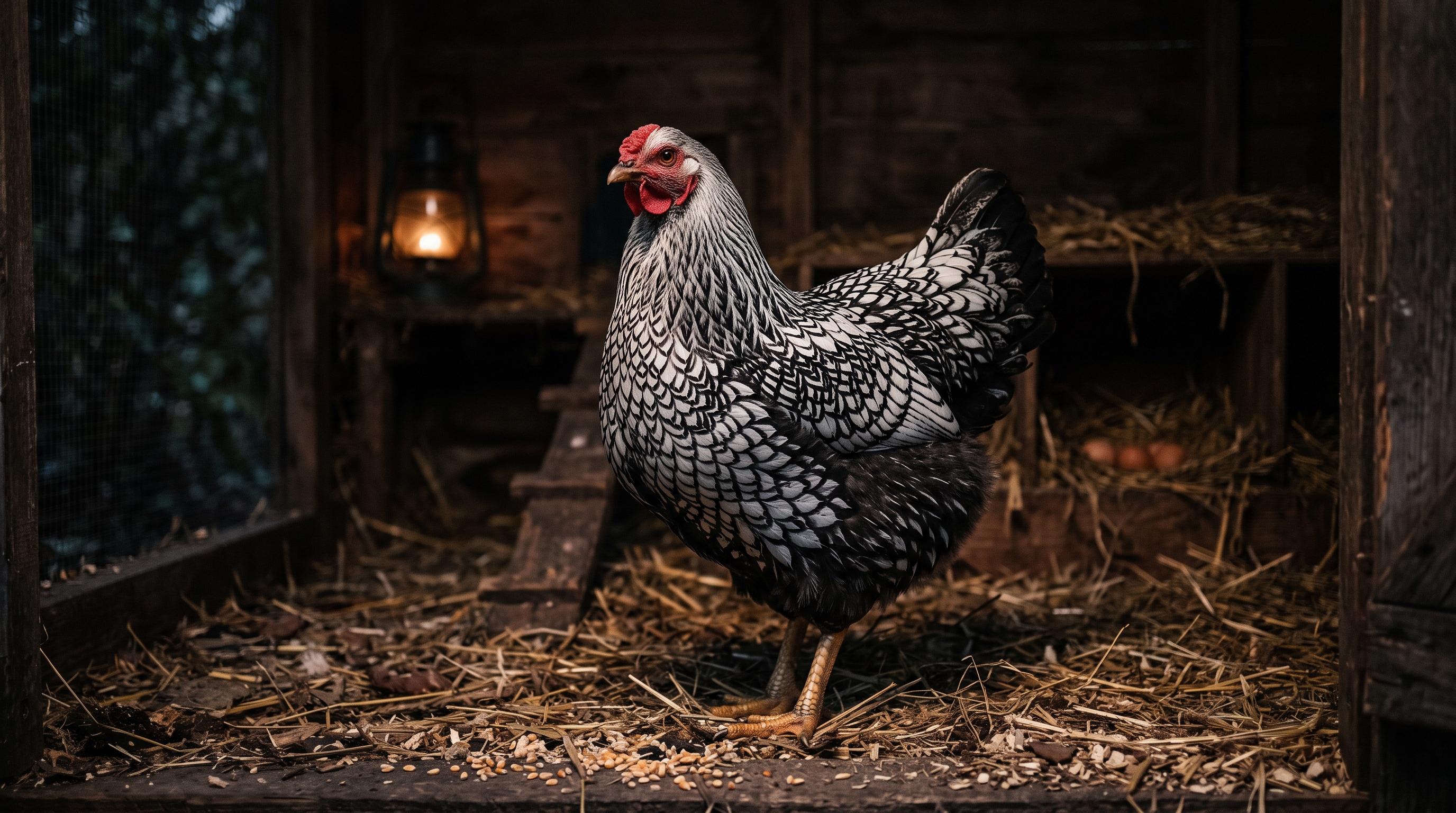
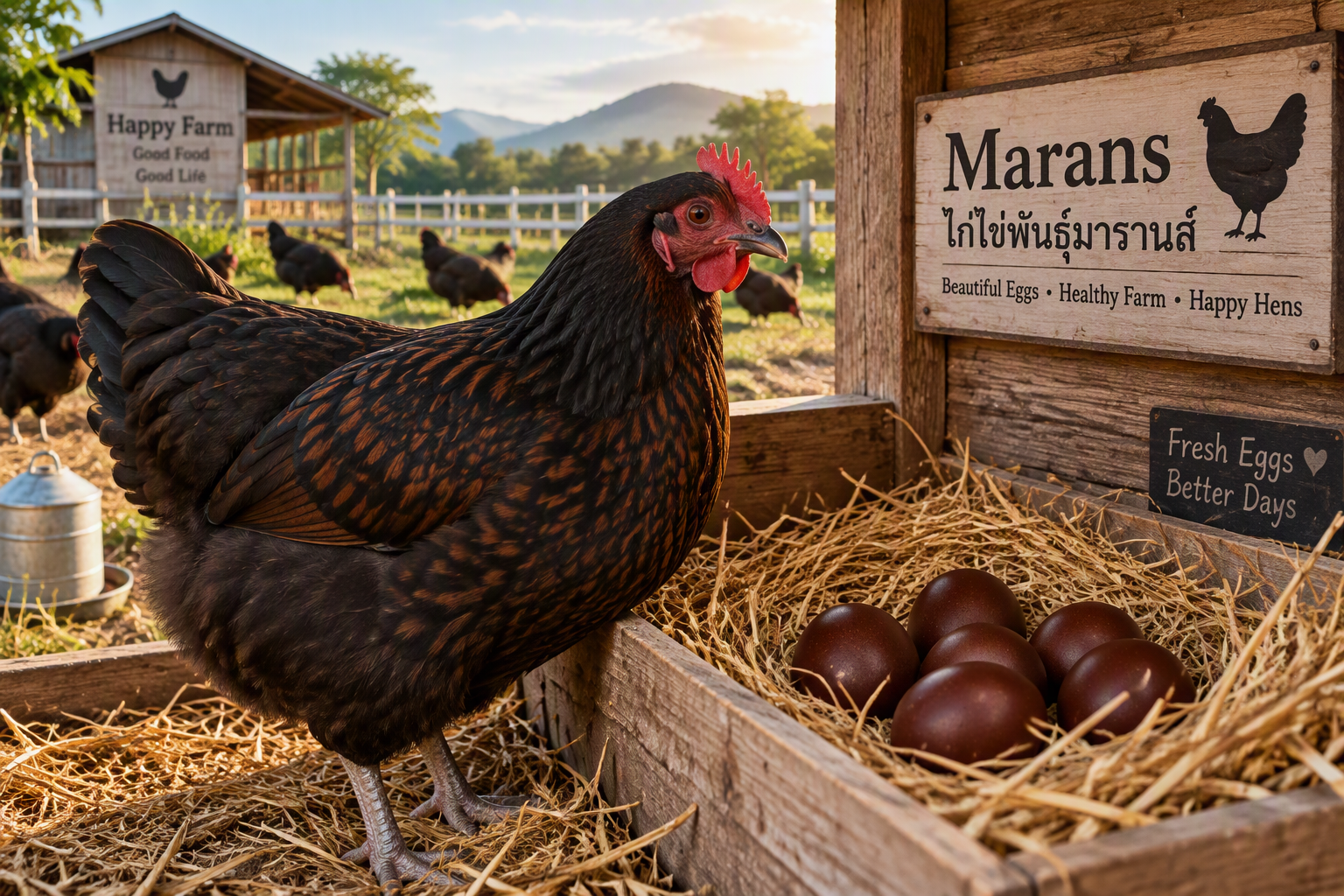

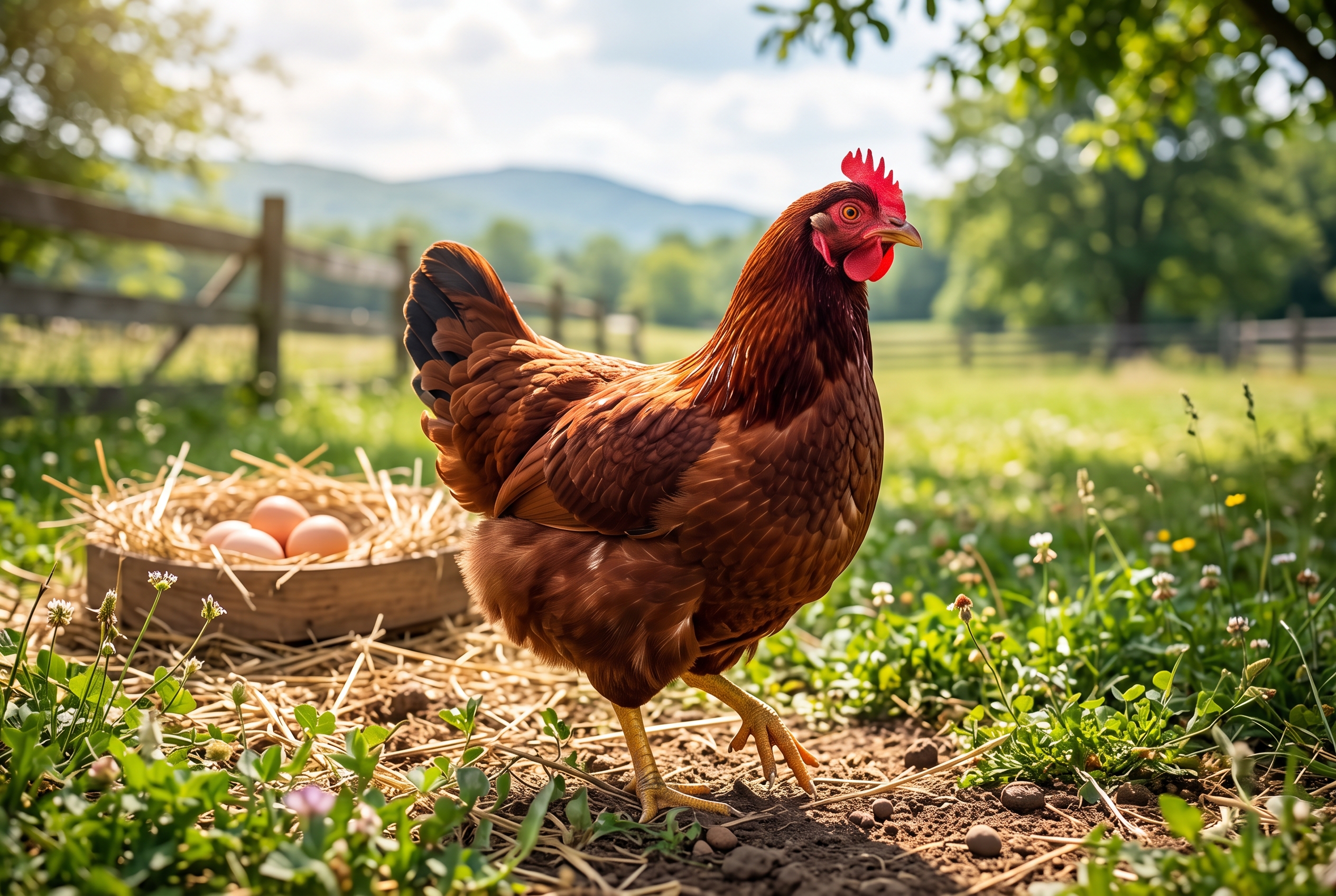
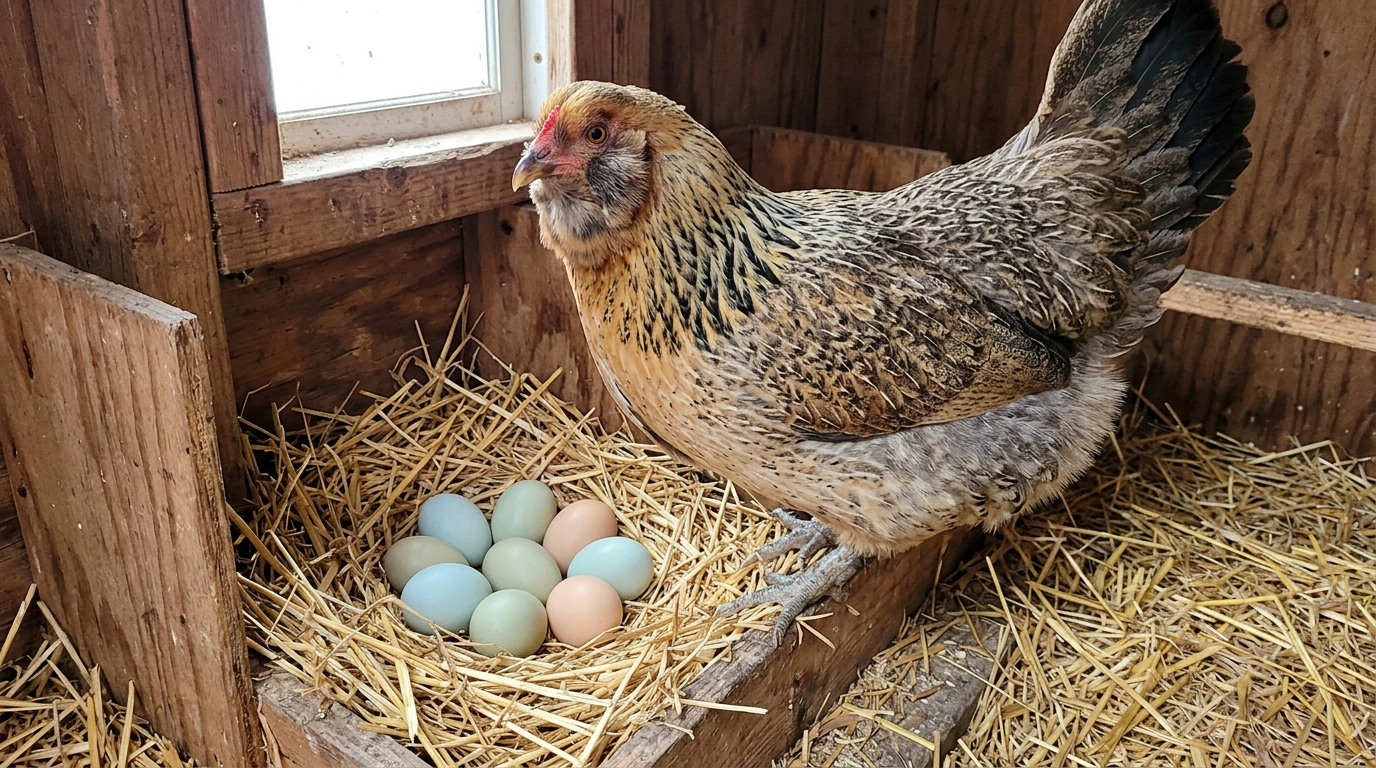
Easter Egger chicken breed (Easter Egger) Not a purebred But it is a hybrid chicken developed from chickens of the Araucana or Ameraucana bloodline together with other chicken breeds. To maintain the properties of giving blue or green eggs and increase strength in raising
The name "Easter Egger" comes from the word Easter (Easter festival) because this type of chicken can lay eggs of various colors similar to the beautifully colored Easter eggs. Currently, colored laying hens are very popular in small farms. organic farm and small farmers around the world
Breed characteristics
Because it is a hybrid chicken Their appearance is therefore more diverse than that of purebred breeds.
shape Medium sized, strong body, grows quickly, adapts well to the environment. The crest is mostly a pea crest (Pea Comb).
Some may have a single crest. Many faces have beards and sideburns (Muffs & Beard), similar to Ameraucana.
Fur color
Available in almost every color such as
white
black
sugar
grey
blue
black and white pattern
forest pattern
Various mixed colors
weight
Male 2.7-3.5 kg.
Female 2.0-3.0 kg.
Highlights of the breed
✅ Give eggs a variety of beautiful colors.
✅ Strong and disease resistant
✅ Easy to raise
✅ Docile temperament
✅ Suitable for free-range raising.
✅ Resistant to hot weather conditions well.
✅ Suitable for beginners raising colored egg laying hens.
color of eggs
Each hen will produce a relatively consistent egg color throughout its life. But the colors are different in each person and can be found such as
🥚 Blue
🥚 Blue-green
🥚 green
🥚 Olive green
🥚 Cream color
🥚 Light pink
Some farms therefore prefer to raise several in order to obtain "Rainbow Egg Basket"
egg production
Start laying eggs at about 5-6 months of age, giving an average of 180-280 eggs per year, average egg weight 55-65 grams, giving good continuous laying.
How to raise
1. Greenhouse
Canopy protects from sun and rain Good ventilation The floor is dry and clean. At least 3-4 pieces per square meter. If raising them free-range, there should be a yard or grass area for them to scavenge for food.
2. Feeding
Chick stage (0-8 weeks): 20-22% protein, clean water at all times.
Young chicken stage (8-18 weeks) 16-18% protein, supplemented with vitamins and minerals.
Laying chicken stage: Protein 16-18%, calcium 3.5-4%. Should supplement with crushed shellfish or crushed limestone.
3. Light management Needs 14-16 hours of light per day. Add lighting during seasons when there is little natural light.
4. Health care
Important vaccines include:
Newcastle (ND)
Gamboro (IBD)
Infectious bronchitis (IB)
Chicken smallpox
They should be dewormed every 4-6 months and keep the house clean at all times.
5. Free-range farming
Easter Eggers are chickens that like to feed themselves and move throughout the day. You can find natural supplements such as:
young grass
insect
earthworm
grass seeds
various vegetables
Helps reduce food costs moderately.
strength
The eggs are beautiful and have a variety of colors.
The selling price of eggs is higher than normal eggs.
Strong, disease resistant
Easy to care for, suitable for beginners.
Chicks come in a variety of beautiful colors.
Suitable for tourist farms and organic farms.
weakness
Not a purebred The characteristics of offspring are not stable.
It is not possible to determine the exact color of a chick's eggs.
Egg production may not be as consistent as commercial breeds.
summarize
Easter Egger is a popular hybrid chicken that is notable for producing colorful eggs, including blue, green, olive, and light pink. It is easy to raise, strong, resistant to disease, and suitable for Thailand's climate. Suitable for farmers and raisers who want to produce premium colored eggs to add value to their farms. Especially when raised together with Ameraucana, Araucana and Marans, you will get colorful egg baskets that are beautiful and in demand in the market. 🥚🌈🐔